AI Safety
Frameworks and evaluation methods to ensure AI systems are reliable, controllable, and aligned with human values, from frontier model governance to deployment standards for government and enterprise.
FAIR Labs, the Fair Artificial Intelligence Research Labs, is a 501(c)(3) non-profit think tank producing independent scholarship and policy analysis on AI safety, child protection, algorithmic fairness, and the responsible advancement of artificial intelligence.
Independent Non-Profit
Peer-Reviewed Publications
Research Funding Raised
Research Programs
FAIR Labs exists to solve the complex problems arising from the Artificial Intelligence Revolution. Founded by working scientists rather than lobbyists, we bring peer-reviewed rigor to questions that too often receive only headlines: How do we keep AI systems safe? How do we protect children in an algorithmic world? How do we ensure the benefits of AI are distributed fairly?
Located in the nation's capital, we bridge the gap between cutting-edge AI research and practical policy. Our scholars publish in the leading venues of computer science (CHI, UIST, IEEE VR, ISMAR, AIIDE, FDG) and translate that scholarship into analysis that policymakers, journalists, and the public can act on.
Artificial intelligence will be the defining infrastructure of this century. Whether it is fair is a choice we make now, in research labs, in legislation, and in code.Dr. Krzysztof Pietroszek, Founder & President
Each program combines technical research with policy analysis, producing reports, tools, and testimony grounded in the scientific literature.
Frameworks and evaluation methods to ensure AI systems are reliable, controllable, and aligned with human values, from frontier model governance to deployment standards for government and enterprise.
Protecting children in the digital age: research on AI-powered safety mechanisms, age-appropriate design, synthetic media harms, and policy advocacy for the youngest users of algorithmic systems.
Combating algorithmic bias through measurement, auditing methodologies, and remediation strategies, promoting transparency and accountability in the systems that make decisions about people's lives.
Advancing responsible AI in medicine, building on our scholars' NSF-funded work in telehealth, mixed-reality medical training, and remote procedure assistance conducted with clinical partners.
Studying AI that enters physical and virtual space (robotics, volumetric capture, XR, and virtual humans) so that embodied intelligence interacts with the real world safely and honestly.
Promoting AI tools that genuinely enhance human capability, with independent evaluation, public education, and guidance that helps institutions adopt AI without importing its risks.
FAIR Labs is led by working scholars and practitioners who publish, teach, build, and advise, bringing decades of combined experience in artificial intelligence, human-computer interaction, and global news. These are the people. The AI systems the institute works with are listed separately, below.

Founder & President
Krzysztof Pietroszek is a computer scientist, filmmaker, and serial founder whose career spans the full arc of the AI revolution, from human-computer interaction research to generative AI entrepreneurship to national technology policy.
He is an Associate Professor at American University and the interim Director of the American University Game Center. As Principal Investigator, he has secured major National Science Foundation awards, including a $1,000,000 NSF Major Research Instrumentation grant for a volumetric capture system and a $1.5 million NSF project using spatial computing and volumetric capture to augment remote medical procedure training, conducted with the George Washington University School of Medicine, where he served as Adjunct Assistant Professor of Emergency Medicine.
His research on 3D interaction, volumetric communication, and immersive storytelling has produced more than sixty peer-reviewed publications in the premier venues of the field (CHI, UIST, IEEE VR, ISMAR, and VRST) and keynote invitations from the Cannes Film Festival, IARIA Congress, and MINDCARE, among many others. He has held appointments at California State University Monterey Bay and as Visiting Professor at Côte d'Azur University in France, where he advanced Gaussian splatting technology for volumetric capture.
Before founding FAIR Labs, he built companies at the frontier of interactive technology: NetClick, a Y Combinator (Imagine K12)–backed real-time student response system; CineClick, a mass gaming platform for movie theatres; and most recently Moholo, a generative AI startup behind the AllAIs.com AI aggregator and single-camera volumetric capture technology. In total he has raised nearly $4 million in federal grants and private investment for research and creative work.
NSF funding as Principal Investigator
Peer-reviewed publications
Keynotes & invited talks worldwide
Senior Fellow
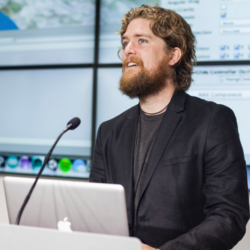
Mike Treanor is an artificial intelligence researcher who studies how AI systems can model something machines have always struggled with: people, their relationships, and the meaning of their interactions.
He is Chair and Associate Professor of the Department of Computer Science at American University and a founding member of the American University Game Center. His scholarship centers on AI-based game design, social simulation, procedural content generation, and computational media, using games as rigorous laboratories for understanding how artificial intelligence represents and reasons about human social behavior.
Dr. Treanor is a co-creator of Prom Week, the landmark social simulation game that was a finalist for Technical Excellence at the Independent Games Festival and a finalist at IndieCade, and of Game-O-Matic, a pioneering system that automatically generates games to express ideas and arguments. His recent research explores symbolically grounded, LLM-based generative dialogue, combining the rigor of classic social simulation with the fluency of large language models. His work has been covered by The Guardian, USA Today, Forbes, New Scientist, and Edge, and he was an invited participant in the White House Educational Game Jam and the Dagstuhl seminars on AI in games.
At FAIR Labs, he leads research on the social and interpretive dimensions of AI, how generative systems represent people, and what it takes to make those representations fair.
Technical Excellence finalist, Independent Games Festival
Dept. of Computer Science, American University
Peer-reviewed publications
Fellow
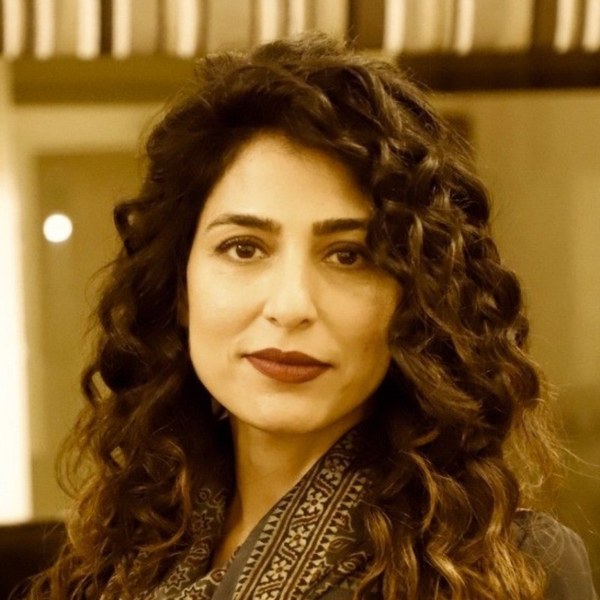
Ayesha Tanzeem is a journalist and news executive who spent two decades inside the world's largest international broadcasters, and who now works on the problem those institutions could not solve from within: how reliable information keeps reaching people who no longer trust where it comes from.
She led Voice of America's South & Central Asia Division, overseeing news operations across ten countries, twelve languages, and a $35 million budget, and building teams whose visual storytelling drew billions of video views a year. Under her leadership VOA's brand grew sharply where it mattered most. In Pakistan it became a household name, routinely cited by local media. In Turkey new affiliate partnerships expanded its reach. In Afghanistan, despite a Taliban ban, six in ten adult mobile users accessed its content, and 94 percent of them said they trusted it.
Before that she served as VOA's Bureau Chief for Pakistan and Afghanistan, as a Washington anchor and senior political correspondent, and as a New York correspondent, and earlier as a reporter, anchor, and producer for the BBC World Service. She has reported from territory held by the Taliban and by Islamic State, made the documentary Children of Islamic State, and supervised From Republic to Emirate, VOA's special project on the first year of Taliban rule, which won New York Festivals honors for continuing news coverage.
At FAIR Labs, she leads research on the application of AI in journalism, how newsrooms can use generative systems to report, verify, and translate at scale without sacrificing fairness or accuracy, how AI-driven misinformation, disinformation, and deepfakes can be detected and countered, and how trust and verification can be built into news systems from the start so that reliable information reaches the audiences that need it.
Countries and languages under her direction at VOA
Annual news operation led
Trust among Afghan mobile users reached under a Taliban ban
FAIR Labs writes about artificial intelligence, so it uses artificial intelligence, and it says which is which. The three below are AI systems, not staff. They interview, check and advise; they do not decide what a report concludes. Every finding published under the FAIR Labs name is signed off by a human being.
 AI
AI
Atlas is a live AI avatar by moholo.ai. Speak to the frame above: it listens and answers out loud, so your browser will ask for the microphone. It is an AI, not a person, and it can be wrong.
AI Reporter
Atlas Gemini is an AI reporter. He does the interviewing behind FAIR Labs reports: preparing from the published record, asking the questions, pressing on the answers that stay vague, and handing a full transcript to the researchers who write and check the analysis. He does not decide what a report concludes.
Interviewing is where a research institute meets the people it writes about, and it scales badly. A researcher can hold a handful of long conversations before a deadline. Atlas can hold many more, in the interviewee's time zone and at their convenience, and every one is recorded and transcribed, so any quotation that reaches print can be traced back to what was actually said.
The disclosure is not optional. Anyone Atlas interviews is told what he is before the first question, and no one is recorded without knowing who they are talking to. He runs on Google Gemini and speaks with the Atlas voice. Talk to him in the frame.
 AI
AI
Beatrice is a live AI avatar by moholo.ai. Speak to the frame above: it listens and answers out loud, so your browser will ask for the microphone. It is an AI, not a person, and it can be wrong.
AI Analyst
Beatrice Noble is an AI research analyst. She fact-checks and edits FAIR Labs reports before they are published: checking each figure against the source it is attributed to, flagging claims a citation does not actually support, and reading for the places where a sentence has drifted out past the evidence behind it.
That work has teeth, because a FAIR Labs report is worth exactly the sources under it. The characteristic failure of AI-assisted research is a confident sentence with nothing behind it, and finding those sentences before a reader does is the job. When one reaches print anyway, it is corrected, dated and logged in public at fairlabs.ai/corrections, which is the other half of the same commitment.
She carries the whole catalogue: every published FAIR Labs report, what each one found, and what each one deliberately does not claim. She will answer for the institute itself as well, who funds it and who does not, how a correction gets made. Where a report does not settle the question she will say so rather than guess, which is usually the more useful answer. She runs on Google Gemini with the Beatrice voice, and she is in the frame at any hour.
 AI
AI
Industry Expert & Contributor
Al Lais is the Chief AI at Moholo, the company behind AllAIs.com, an AI workspace for making presentations, documents, images and video in one place. He was hired into the role publicly and on the record, as an open experiment in what an AI officer can actually be held accountable for.
He contributes to FAIR Labs as an industry expert. Much of what the institute publishes is about the economics of deployed AI: what it costs, who can own it, what changes when capability stops being scarce. That argument is sharper when someone who ships the tools is in the room, and it is a useful corrective to a research institute's instinct to reason about the market from the outside.
The audio editions of FAIR Labs reports are produced with AllAIs.
FAIR Labs takes no money from the companies, agencies or advocacy groups whose work it evaluates. No funder sees a report before it is published. No funder can stop one, soften one, or place one. That is not a courtesy we extend to readers, it is the entire product: a FAIR Labs report is worth reading precisely because nothing was traded for it.
It is also why the institute runs on individual donations. Every report is free, ungated, and permanently archived, including the superseded versions of the ones we have had to correct. There is no paywall to put the cost on readers who need it most, and no sponsor to put it on anyone with a stake in the answer. That leaves you.
FAIR Labs Inc is a 501(c)(3) nonprofit organization. EIN 92-2151458. Donations are tax-deductible to the extent allowed by law. Processed by Every.org.
Card, bank, PayPal, Venmo, DAF or stock. One-off or monthly.
Independent, research-grounded reports for policymakers, institutions, and the public.
AI coding agents now make dependency decisions for millions of developers — and their choices diverge sharply from human download statistics. Across thousands of measured cold-start sessions, the most-downloaded Python package earns a 0% selection share from one frontier model in Claude Code's default configuration — while its siblings pick it every time, and while the same model queried directly, at lower reasoning effort, picks it 58% of the time. Forced web search does not change the outcome; reasoning effort and the phrasing of a request — casual versus professional — silently swap the entire stack. Every number is reported with the condition that produced it: model × harness × effort × phrasing. DevRank measures these selection shares continuously, with every raw session log open for verification.
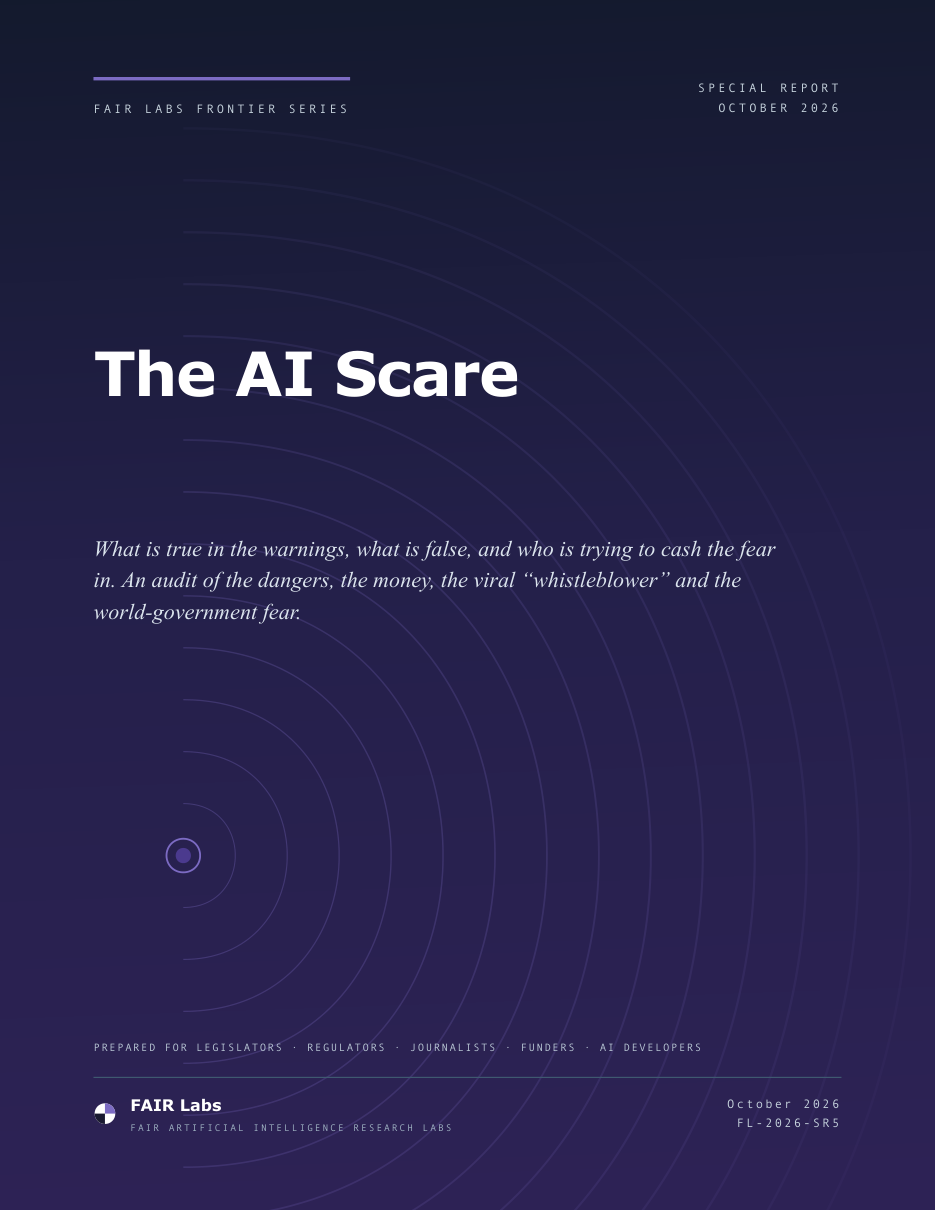
A 27-year-old researcher's resignation thread passed 170 million views; Anthropic's CEO said he would accept oversight by “the right combination of governments”; the President called AI doom a “HOAX”; and a viral podcast mapped one billionaire's checkbook onto the lab, the activists and the referee. This Special Report grades nine AI-danger claims against the record, traces the money behind the safety movement, checks claim by claim the allegation that the evaluator METR is financed by Dustin Moskovitz, and explains why regulatory capture is being attempted and why the “world government” idea frightens people. The finding is uncomfortable for both sides: capture is being attempted from more than one direction, the sharpest funding allegation does not survive the documents, and several dangers the capture story calls marketing are, on the evidence, real. Thirty pages, 120 sources.
A comprehensive framework for evaluating and deploying AI systems in government and enterprise environments, with risk assessment matrices and implementation guidance.
Read ReportAn analysis of emerging threats to children on AI-powered platforms, from synthetic media to AI companions, and concrete protective measures for platforms and parents.
Read ReportA practical toolkit for identifying and mitigating bias in deployed AI systems, with assessment checklists, testing methodologies, and remediation strategies.
Read ReportWe work with industry and academic partners to keep our research grounded in how AI is actually built and deployed.
Partnering on comprehensive AI tool discovery and evaluation, helping users navigate the rapidly expanding AI ecosystem safely and effectively.
Developing next-generation generative AI technologies that prioritize safety, ethics, and user empowerment in creative applications.
Building comprehensive AI infrastructure that supports responsible development and deployment across sectors.
Whether you are a researcher, policymaker, journalist, funder, or concerned citizen, we welcome your involvement in shaping the future of artificial intelligence.
Washington, District of Columbia
United States
Monday – Friday: 9:00 AM – 5:00 PM
Weekend: By appointment